Your competitor ranks number one for “2024 Honda CR-V near me.” You’re on page three. That’s 15 qualified shoppers daily clicking their site instead of yours. And you’re paying $47 per click on Google Ads to compete for the same traffic they get free. If you’ve ever wondered why your competitor ranks higher, the answer often starts with their model pages.
We’ve worked exclusively with car dealerships for 20 years. In that time, the dealers who dominate local search share one thing: they treat model landing pages as conversion assets, not afterthoughts.
Here’s what actually moves the needle.
5 Elements of High-Converting
Model Landing Pages
What 20 years of automotive SEO taught us about pages that drive leads
Why Page Speed Determines Your Rankings
Google’s been clear about this. If your model pages take longer than three seconds to load on mobile, you’re losing shoppers before they see your inventory. According to Google’s research on mobile page speed, the probability of bounce increases 32% as page load time goes from one to three seconds. And with the majority of automotive searches happening on phones, mobile speed isn’t optional.
We audit model pages constantly. The pattern we see: dealers lose rankings not because competitors have better content, but because their sites load faster. You can test your own pages using Google’s PageSpeed Insights to see exactly where you stand.
The technical details matter, but you don’t need to understand HTTP/2 push or Brotli compression. You need a site that loads fast and displays properly on every device. If your current provider can’t deliver sub-three-second load times, that’s a conversation worth having.
How VIN-Level Schema Markup Gets You Noticed
Think of schema markup like the detailed window sticker on your lot. It tells Google exactly what you have: specific VIN, trim level, pricing, availability. Without it, your model pages are invisible to the rich results that drive clicks.
We’ve seen dealers jump from generic blue-link listings to enhanced results with pricing, ratings, and availability badges just by implementing proper vehicle schema. Google’s structured data documentation for vehicles outlines exactly what fields to include. The clicks follow when you get this right.
Your inventory management system likely has all this data already. The question is whether it’s formatted so Google can read it. Most dealer websites we audit have incomplete or missing schema on model pages. Our dealership SEO audit framework covers exactly how to identify these gaps and prioritize fixes.
Aligning Your Google Business Profile With Model Pages
Your model pages and Google Business Profile need to match exactly. Name, address, phone number, hours. When they don’t match, Google trusts you less. When they do match, your local rankings improve.
This sounds simple, but we audit dealership websites where the GBP shows different hours than the website, or the address format doesn’t match. Small inconsistencies create big problems for local visibility. Google’s own Business Profile guidelines emphasize accuracy and consistency as ranking factors.

What Multi-Store Operators Need to Know
For multi-store operators, this gets complicated fast. Each location needs its own consistent signals. We typically recommend centralized management with location-specific elements. Our guide on multi-store dealership local SEO strategy breaks down how to scale this without creating chaos across a dozen rooftops.
What Google Actually Rewards on Model Pages
Your H1 should include the model, year, and your location. Your first paragraph should hit the primary keyword naturally. Your content should answer the questions shoppers actually ask: pricing, availability, how this model compares to alternatives.
Forget keyword density formulas. Write for the person sitting across the desk asking “What can you tell me about the CR-V?” Answer that question thoroughly, and the SEO follows.
We see dealers overthink this. The model pages that rank well share common traits: they load fast, they’re easy to navigate on mobile, they have complete schema, and they answer buyer questions directly. Google’s helpful content guidelines confirm this approach: create content for people first, not search engines.
Tracking Organic Leads Separately From Paid Traffic
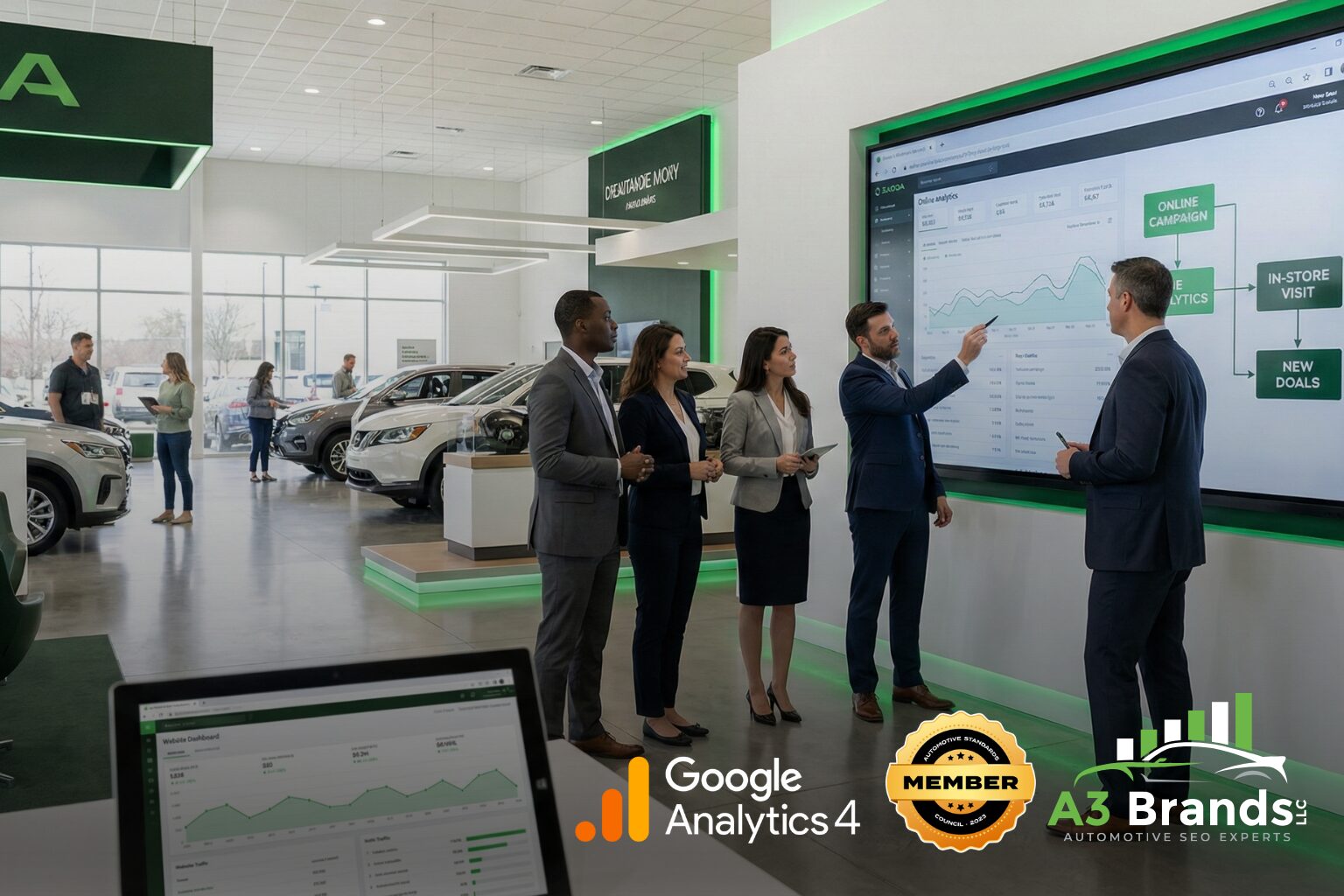
If you can’t track organic leads from model pages separately from paid traffic, you can’t prove ROI. Most dealer analytics setups we audit blend everything together, making it impossible to know which pages actually generate business.
Set up proper event tracking. Tag your CTAs. Import lead data back to see which organic keywords produce actual sales, not just form fills. We wrote about ASC implementation and how we cut dealer PPC waste with GA4 tracking for dealers who want the technical details on attribution.
When you can show that organic model page traffic converts at a higher rate than paid traffic, the budget conversation changes. Understanding the real cost difference between PPC and SEO helps frame that conversation with your CFO or ownership. Cox Automotive’s research consistently shows digital retailing and online research drive the majority of purchase decisions, making organic visibility more valuable than ever.
The 90-Day Model Page Test
Pick your three highest-volume models. Implement proper schema, optimize load speed, align GBP signals, and improve CTA placement. Track organic traffic, lead submissions, and conversion rates for 90 days.
In our experience, dealers who execute this consistently see material improvement in organic visibility and lead quality. The specific numbers vary by market competition and starting position, but the pattern holds. If you want a structured approach, our 90-day dealership SEO plan walks through exactly what to prioritize each month.
The dealership across town either already did this or they will. The organic real estate in local search is limited. The question isn’t whether model page optimization matters. It’s whether you claim that territory before they do.

See Where Your Model Pages Stand
We’ll audit your top model pages, compare them to your three closest competitors, and show you exactly where you’re losing ground. No charge for the audit. If it makes sense to work together, we’ll talk about it. If not, at least you’ll know what needs fixing.
Call A3Brands directly at 302-394-6940 or email info@a3brands.com.

Tim Boyle

90-Day SEO Pilot for Dealerships: 2026 ROI Guide

Local SEO for Multi-Store Auto Dealers: The Operational Playbook

Why Your Dealership Conversion Tracking Is Costing You More Than Your Ad Budget

A3 Brands Heads to Digital Dealer 2026: Why AI Search Is the Biggest Shift in Dealership Visibility

How Multi-Store Dealer Groups Finally Make SEO Measurable Across Every Location