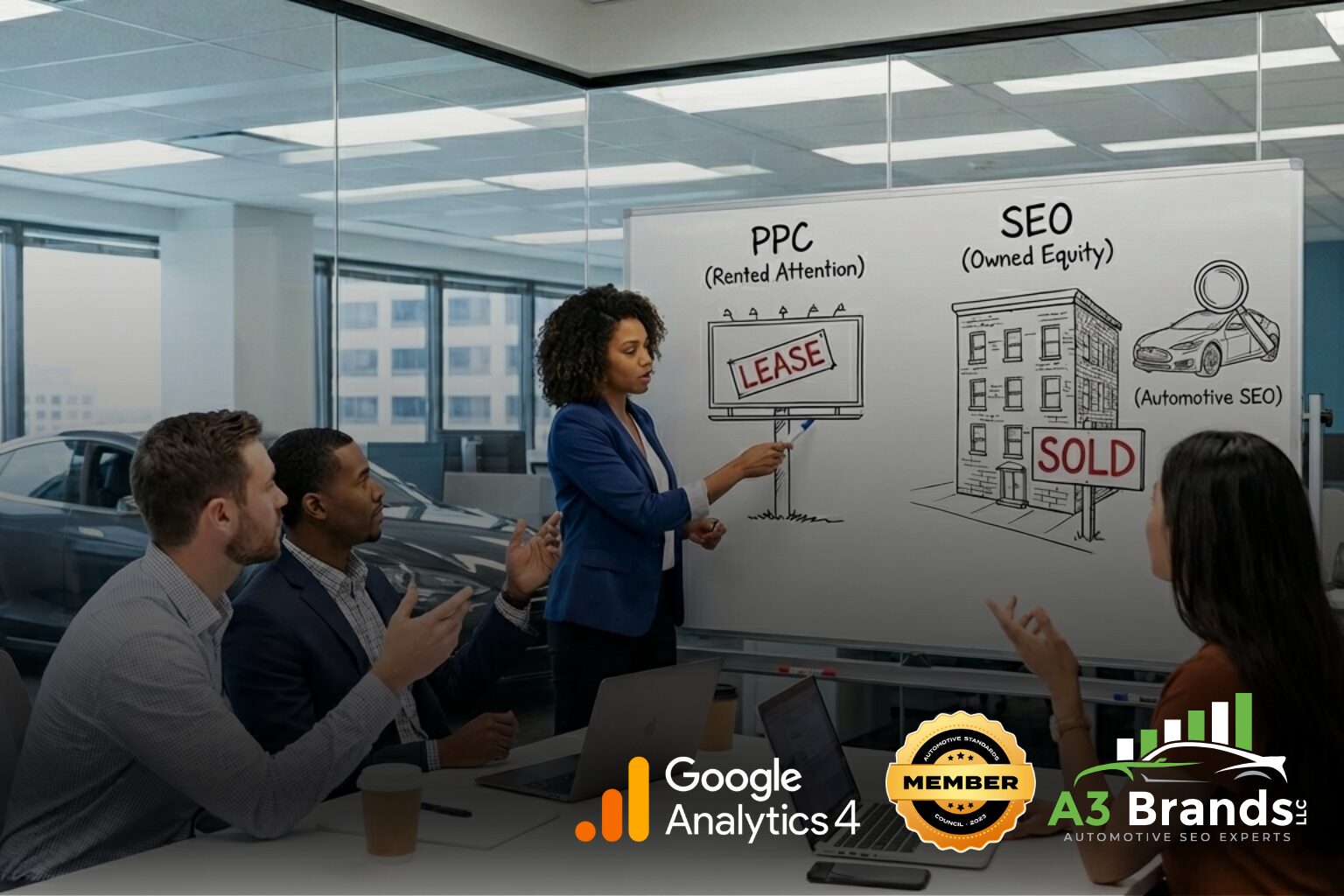
Most dealerships overpay for Google Ads by 30-50% once you factor in management fees, creative costs, bid inflation, and leads that would have found you organically anyway. We’ve spent 20 years helping dealers shift from rented traffic to owned rankings. This guide walks you through the real math so you can see when organic SEO actually beats paid search for your store.
The Real Math
PPC vs SEO: What You're Really Paying
Your $150 cost-per-lead isn't $150. Here's where your budget actually goes.
PPC Reported Cost
What your dashboard shows
Hidden costs eating your budget:
Real Cost: $280-$320
That's 87-113% more than reported
SEO Compounding Value
How organic investment grows
One model-specific page: $500 investment
PPC Model
Pay Forever
Every click costs $$$
SEO Model
Invest Once
Compounds over time
Typical Result: 50-70% PPC Reduction
While increasing total lead volume
PPC rents attention. SEO builds equity.
After 6-8 months, SEO-generated leads typically cost a fraction of PPC leads.
Based on 20+ years of dealership marketing data
The Number That Should Make You Uncomfortable
Here’s what we see constantly: a dealer spending $15,000 a month on Google Ads, proud of their $150 cost-per-lead. Looks reasonable on paper.
But that $150 is a lie.
Add in your agency’s management fees (typically 15-22% of spend). Add the landing page updates and ad creative your team produces. Add the tools and tracking software. Now factor in something most dealers never consider: a significant chunk of those “paid” leads would have found you organically anyway. They searched your dealership name, clicked your ad, and you paid Google for a customer who was already coming.
When we audit PPC accounts, that $150 lead usually costs $280-$320 in reality. And that changes everything about which channel actually wins.
Why We’re Having This Conversation Now
We’ve worked exclusively with car dealerships for over 20 years. In that time, we’ve watched Google Ads go from a competitive advantage to a bidding war that favors whoever’s willing to overpay the most.
The dealers winning today aren’t the ones with the biggest ad budgets. They’re the ones who figured out that organic search builds equity while paid search rents attention.
This isn’t about abandoning PPC entirely. It’s about understanding the real economics so you can make smarter decisions with your marketing dollars.
What “Real Cost” Actually Means
Let me break down what you’re actually paying for each channel.
For paid search, your true cost includes ad spend plus management fees (agency or internal time), creative production and testing, bid management tools, and the leads you’re paying for that would have converted without the ad. That last piece is what we call cannibalization, and it’s bigger than most dealers realize. On branded searches (your dealership name), 40-60% of paid clicks would have happened organically. You’re essentially paying Google for customers who were already yours.
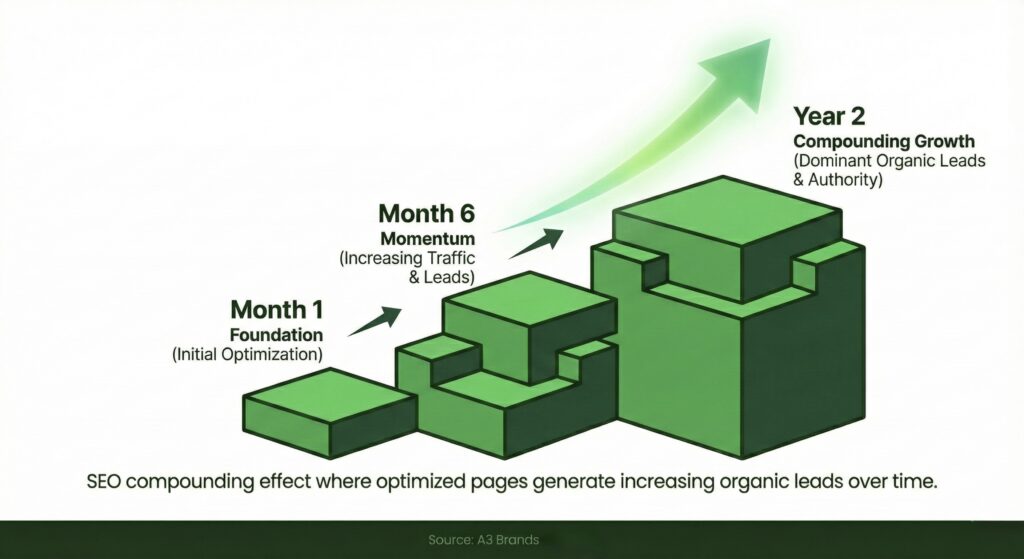
For SEO, your investment looks different. There’s upfront work: technical fixes, content creation, Google Business Profile optimization. Then ongoing maintenance: fresh content, link building, technical updates. The difference? That work compounds. A page we optimize today keeps generating leads for years. The cost per lead drops every month as traffic grows but investment stays flat.
Here’s a pattern we see repeatedly: a model-specific page might cost $500 to create. In month one, it generates 10 leads, so $50 per lead. By month six, that same page generates 60 leads from the same $500 investment. By year two, you’re looking at hundreds of leads from a single piece of content. PPC can’t do that. Every click costs money, forever.
The Hidden Drains Eating Your PPC Budget
Three forces work against your paid search ROI over time.
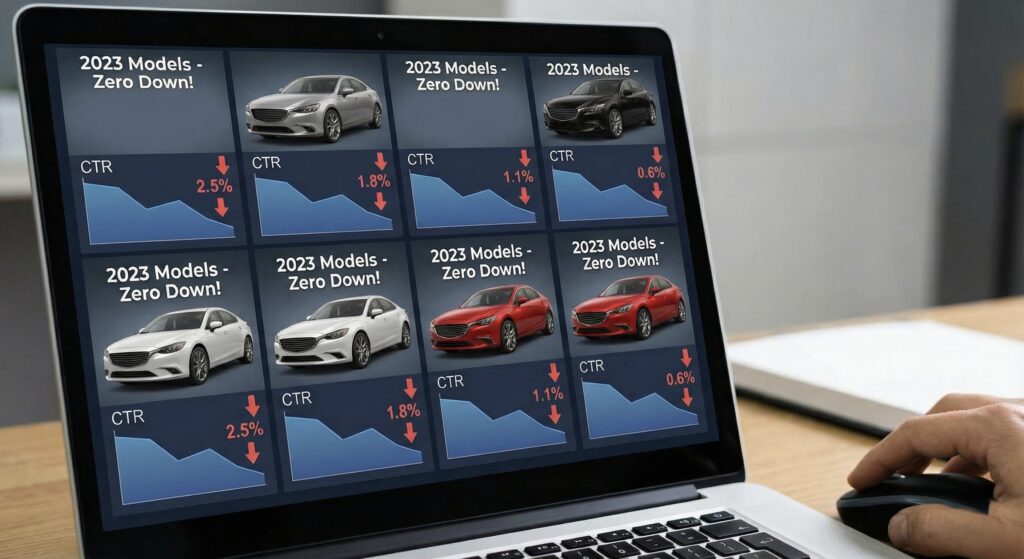
Ad fatigue hits every campaign. The same creative shown to the same audience loses effectiveness. We typically see click-through rates drop 30-40% over 12 weeks of continuous exposure. To maintain visibility, you either refresh creative (more cost) or bid higher (more cost). Either way, you’re running faster to stay in place.
Bid inflation is predictable and relentless. In competitive markets, expect your cost-per-click to rise 8-12% annually, and up to 20% for high-intent keywords like “buy Honda Accord [your city].” Your budget buys fewer clicks every year unless you increase spend. We’ve written about why paid advertising isn’t sustainable long-term for this exact reason.
Cannibalization is the silent killer. When you bid on branded terms or model searches where you already rank organically, a portion of those paid clicks aren’t incremental. They’re customers you would have gotten anyway. We’ve run tests where dealers paused branded PPC entirely. The drop in total leads? Much smaller than the PPC reports suggested. That gap represents wasted spend.
Why Organic Leads Convert Better
This is something we’ve observed consistently across hundreds of dealer accounts: organic leads tend to be higher quality than paid leads.
The reasons make sense when you think about it. Someone who finds you through organic search typically spent more time researching. They compared options. They read your content. By the time they contact you, they’re further along in their decision.
In our experience, organic visitors engage more deeply with vehicle detail pages, come from closer geographic areas (meaning they’re realistic buyers, not tire-kickers from three states away), and move to purchase faster once they make contact. That’s why we focus on conversion-focused SEO rather than just chasing traffic numbers.
When you factor in service department visits and referrals over a customer’s lifetime, organic-acquired customers often deliver significantly more value than PPC-acquired customers. That changes the math on what you should be willing to invest in each channel.
How to Calculate This for Your Dealership
You don’t need complicated formulas. You need honest numbers.
Start with your customer economics. What’s your average gross profit per vehicle? What’s a service customer worth over 3-5 years? What percentage of leads actually become buyers? These numbers tell you what a customer is worth, which determines what you should pay to acquire one.
Then look at channel performance. Pull your organic traffic and conversion rates from analytics. Pull your paid click and conversion data. Get lead-to-sale rates by source from your CRM. This shows you what each channel is actually producing.
Finally, calculate true costs. For PPC, add up everything: spend, fees, creative, tools. Divide by actual sales (not leads) to get real cost per customer. For SEO, total your investment over time and divide by cumulative customers generated.
When you compare true cost per customer, not cost per lead, the picture often shifts dramatically in SEO’s favor after month 6-8.
The Transition That Actually Works
We don’t recommend flipping a switch. We’ve seen that backfire.
What works is a phased approach. Start with a 90-day SEO pilot where you invest in SEO foundations while maintaining PPC. As organic traffic and leads grow, gradually reduce paid spend on keywords where you’re ranking well organically.
A realistic timeline looks like this: in months one through three, you run PPC-heavy while building SEO foundations. Months four through nine, you shift toward a balanced split as organic gains traction. By month ten and beyond, SEO carries the majority of your acquisition while PPC handles specific tactical needs like new model launches or seasonal pushes.
The key is setting clear triggers. When organic share of voice hits a certain threshold, reduce branded PPC. When organic cost-per-lead reaches parity with paid, accelerate the shift. When organic leads match PPC quality metrics, you know the transition is working.
The Operational Reality Check
None of this matters if your operations leak value.
Response time is the biggest factor we see. Every hour delay in contacting a lead reduces conversion probability. Dealers with sub-five-minute response times convert at dramatically higher rates. If your BDC takes 24 hours to follow up, you’re wasting money regardless of which channel generated the lead.
Your CRM attribution also matters. If tracking is broken (and in our experience, 20-30% of dealer CRMs have significant attribution errors), you’re making decisions based on bad data. Fix your tracking before you trust your numbers.
What This Means for Your Dealership
Here’s the reality: dealers who depend entirely on PPC face rising costs and diminishing returns. The economics are working against you.
Dealers who invest in organic search build assets that appreciate over time. After the initial investment period, typically six to twelve months, SEO-generated leads cost a fraction of PPC leads and often convert better. We’ve outlined a complete content marketing approach to reduce PPC costs that walks through this transition in detail.
This isn’t theoretical. We’ve helped dealers reduce their paid search dependence by 50-70% while increasing total lead volume. The money saved on PPC gets reinvested into content and optimization that keeps compounding.
Ready to See What Your PPC Is Really Costing You?
We’ll audit your current paid search spend, identify how much you’re losing to cannibalization and bid inflation, and show you exactly where organic SEO could deliver the same leads for less. Takes about 30 minutes. No cost, no commitment.
If the numbers make sense, we’ll build a phased transition plan to start shifting budget from rented clicks to owned rankings. If they don’t, you’ll still have a clear picture of your true cost-per-customer across both channels.
Request Your Free PPC vs SEO Analysis or call us at (302)-394-6940 or email info@a3brands.com to schedule a time

Tim Boyle
90-Day SEO Pilot for Dealerships: 2026 ROI Guide

Local SEO for Multi-Store Auto Dealers: The Operational Playbook

Why Your Dealership Conversion Tracking Is Costing You More Than Your Ad Budget

A3 Brands Heads to Digital Dealer 2026: Why AI Search Is the Biggest Shift in Dealership Visibility
How Multi-Store Dealer Groups Finally Make SEO Measurable Across Every Location