
Most dealers treat model pages like digital brochures. Upload some photos, paste the manufacturer description, add a form. Done.
And then they wonder why those pages don’t convert.
We’ve been building and optimizing dealership websites for over 20 years. In that time, we’ve learned something that sounds obvious but most dealers miss: a model landing page should pay for itself. Fast. If it doesn’t, you built it wrong.
Here’s how we think about it, and how the dealerships we work with are turning model pages into actual revenue drivers.
Model Landing Page Payback Calculator
How profitable pages pay for themselves in months, not years
What Drives Conversions
PPC vs Organic: The Math
Realistic Timeline
This is a long-term investment, not a quick fix
Call Tim directly for a no-charge review of your model pages
Stop Thinking About Pages. Start Thinking About Payback.
The math is simple. Take your build cost. Divide by incremental monthly gross profit. That’s your payback period in months.
Build cost divided by monthly profit equals payback period. If a $5,000 page generates $2,500 in incremental monthly profit, you’re paid back in two months. Everything after that is pure upside.
We’ve seen payback periods range from under a week for high-traffic stores to a few months for lower-volume locations. The point isn’t hitting a specific number. The point is measuring it at all.
Most dealers can’t tell you what their model pages actually produce. They track traffic, maybe. Leads, sometimes. But profit contribution? Almost never.
That’s the first thing we fix when we approach conversion-focused SEO for our clients.
What Actually Drives Conversions
After testing hundreds of variations across dealership sites, we’ve identified the patterns that consistently move the needle.
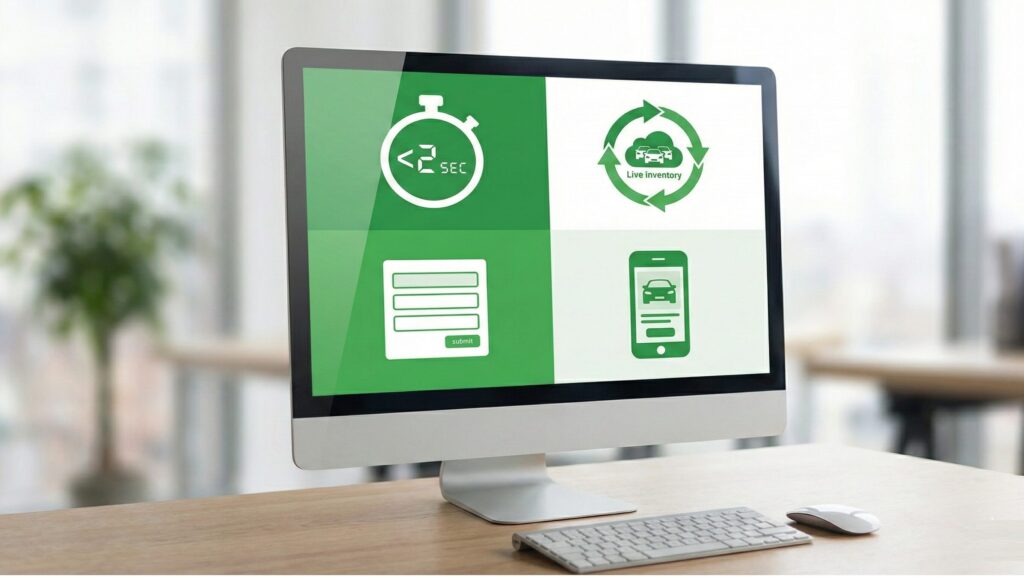
Speed matters more than you think. Pages loading under two seconds convert significantly better than pages loading in three or more seconds. Google’s research on mobile page speed confirms that as load times increase, bounce rates climb dramatically. We prioritize load time before anything else. Our technical SEO checklist for dealership websites covers the fundamentals you need to get right.
Live inventory integration is non-negotiable. Static pages with outdated pricing frustrate shoppers and waste your team’s time on dead leads. When inventory feeds update in real-time, customers see what’s actually available. That builds trust and reduces friction.
Forms should be short and specific. We’ve tested everything from three fields to fifteen. Shorter wins almost every time for initial contact. Progressive profiling lets you gather more information after they’ve already engaged.
Mobile comes first. According to Cox Automotive’s Car Buyer Journey Study, the majority of automotive research now happens on mobile devices before shoppers ever visit a dealership. If your model pages aren’t optimized for mobile, you’re losing the majority of your potential customers before they ever see your inventory. We’ve written extensively about why good website UX matters for car dealerships and how it directly impacts lead generation.
The SEO Angle You’re Probably Missing
Here’s where we get excited, because this is our specialty.
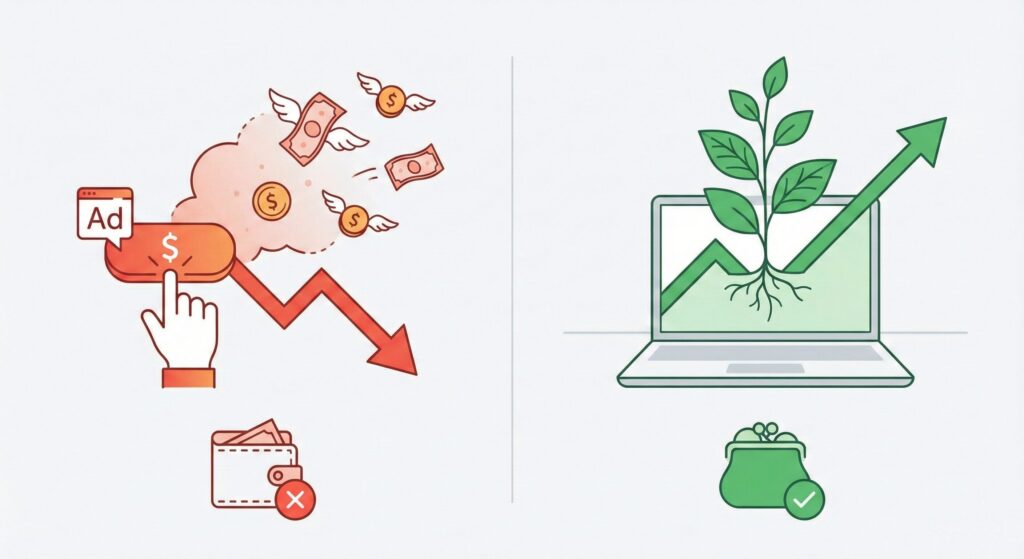
Most dealers rely heavily on paid search for model-specific traffic. “Honda Accord [city]” clicks cost $15-25 each on Google Ads, sometimes more in competitive markets. That adds up fast.
But organic rankings for those same terms? Once you earn them, the clicks are free.
We’ve covered this tradeoff in depth in our breakdown of organic SEO vs. PPC ads for dealerships. The short version: paid search has its place, but building organic visibility for your highest-value models creates sustainable traffic that doesn’t disappear when you pause your ad budget.
We build model pages with transactional intent in mind. That means targeting keywords where someone is ready to buy, not just research. “Honda Accord for sale [city]” beats “Honda Accord specs” every time for lead quality.
Proper technical structure matters too. Vehicle schema markup helps search engines understand your inventory details like make, model, year, mileage, and price. Unique, dealer-specific content beats manufacturer copy that appears on thousands of other sites. Clean URL structure and internal linking help Google crawl and rank your pages.
Google’s Search Quality Evaluator Guidelines emphasize that content demonstrating first-hand experience and expertise ranks better. That’s why original vehicle descriptions written by your team outperform copy-pasted manufacturer specs every time.
This isn’t complicated, but it does require attention. The dealerships that invest in SEO-first model pages typically reduce their paid search dependency over 12-24 months. We’ve seen PPC budgets drop 50-70% for clients who commit to organic optimization.
Multi-Location Considerations
For dealer groups running multiple stores, the economics get interesting.
Build the system once, adapt for each location. The first store requires full development investment. Subsequent stores use the same templates with localized inventory, pricing, and incentives. Per-location costs drop dramatically after the initial build.
The challenge is consistency. Different stores, different markets, different inventory mixes. The template system needs to be flexible enough to accommodate local differences while maintaining the technical foundation that drives performance.
We’ve built these systems for groups ranging from three locations to over fifty. Our guide on multi-store dealership local SEO strategy covers the specific considerations for scaling across rooftops without losing performance at individual locations.
What We’d Actually Measure
If you’re evaluating model landing page performance, focus on these metrics:
Conversion rate by model. Not overall site conversion. Specific pages, specific models. Which ones perform and which ones need work?
Cost per lead compared to paid channels. What’s your organic CPL versus your Google Ads CPL for the same model? If organic is significantly cheaper, that tells you where to invest.
Lead quality indicators. Test drive requests, finance pre-qualifications, and trade-in submissions signal higher intent than general contact forms. Track them separately.
Downstream performance. Do leads from model pages close at the same rate as other sources? Show at the same rate? If not, you have a quality problem to solve.
We build dashboards that connect these metrics so dealers can see actual ROI, not just activity. Google’s guidance on measuring what matters reinforces why tracking business outcomes beats vanity metrics.
The Honest Truth About Timeline
We’re not going to tell you this happens overnight. It doesn’t.
A properly built model landing page system takes 8-12 weeks from planning through launch. Add another 60-90 days to see meaningful SEO improvements. CRO testing is ongoing and iterative.
The dealerships that succeed treat this as a long-term investment, not a quick fix. They commit to the build, measure the results, and optimize continuously.
The ones that fail expect immediate results from minimal investment. Or they build the pages and never update them. Or they skip the measurement entirely and can’t tell if it’s working.
We’re upfront about this because we’d rather set realistic expectations than overpromise and underdeliver. As NADA’s dealership financial profile data shows, the dealerships with the strongest digital presence consistently outperform on key profitability metrics.
Let’s Look at Your Current Pages
We’ll pull your top model pages, show you where they’re losing ground to competitors, and outline what it would take to turn them into actual profit drivers.
No charge for the audit. If it makes sense to work together, we’ll talk about it. If not, you’ll at least know what you’re working with.
A3 Brands is an automotive-only digital marketing agency. We don’t work with dentists, lawyers, or HVAC companies. Just dealerships. 42 of them across the country.
We’ll be at NADA 2026 in Las Vegas (February 3-6) unveiling GALAXY, our AI-powered content system built to keep your dealership in front of every buyer searching your market.
Stop by Booth #7720N or request a free competitive analysis at https://a3brands.com/galaxy/.

Tim Boyle

90-Day SEO Pilot for Dealerships: 2026 ROI Guide

Local SEO for Multi-Store Auto Dealers: The Operational Playbook

Why Your Dealership Conversion Tracking Is Costing You More Than Your Ad Budget

A3 Brands Heads to Digital Dealer 2026: Why AI Search Is the Biggest Shift in Dealership Visibility

How Multi-Store Dealer Groups Finally Make SEO Measurable Across Every Location