
The problem
Why your store reads the same as every other rooftop
Every car dealer in the country starts from the same starting line. Your OEM gives you model pages. Your OEM gives you safety-feature descriptions. Your OEM gives you warranty copy. Your website vendor (Dealer.com, DealerOn, DealerInspire, Sincro) puts that copy into a template, drops in your city name, and pushes it live.
Three things break the moment that template goes live.
Google can't pick a winner. When thirty dealers in your state run the same Camry page with the same body copy, Google has nothing to choose between you. It defaults to proximity plus a few backlinks plus your Google Business Profile. Your content investment is no longer giving you a ranking edge. It's giving you a coin flip.
Buyers researching on AI tools never see your store named. When a shopper asks ChatGPT or Google's AI Overviews for the best Camry near them, the AI looks at what's documented across the public web. Thirty dealers saying the same thing gets reduced to one citation — the OEM's national site — and the local dealers vanish from the answer. The dealer that spent money producing the content does not show up in the AI answer. The national OEM site does.
Your actual competitive edges stay hidden. Your founding year. Your named people. Your service tenure. Your real review count. Your specific OEM awards. Your community work. Your trade-in transparency. None of that is on your model pages, because the OEM template was written before your store existed.
Brand DNA is the layer that fixes all three. It's the documented set of facts that makes your store specific, citable, and recognizably different from every other rooftop selling the same brand.
Plain-language definition
What Brand DNA actually is
Brand DNA is a documented set of verified facts about two things. First, what your OEM actually stands for in the U.S. market — written using only language the OEM uses about itself, with every claim traceable to a primary source.
Second, what makes your specific store different from every other dealer selling that brand. This is the part most websites get wrong, because the OEM template can't say anything about your store specifically.
A finished Brand DNA report includes:
- Your positioning. What your OEM stands for, in their language. Not your interpretation of it.
- Your brand pillars. The three to five things the OEM emphasizes consistently in their own marketing — and which ones matter most in your market.
- Your voice. How the OEM talks about itself, what words they use, what tone they hold. Plus the protected marketing phrases that belong to the OEM and that your dealer site is not allowed to claim as its own.
- Your facts. Founding year. Parent company. Headquarters. Real warranty and maintenance program names. Real review counts. Real award counts. Real named people.
- Your differentiation. What separates your specific rooftop from every other dealer selling the same OEM in your region.
That document becomes the foundation for every model page, every service page, every blog post, every Google Business Profile description, every AI-search answer your store wants to appear in.
What changes for your store
What changes in your dealership's content once this layer is in place
Three things change in your store's content program once the Brand DNA layer is built.
Your model pages stop looking like every other dealer's. A Toyota dealer with a real Brand DNA layer publishes a Camry page that speaks to their actual buyer's actual decision drivers — long-term reliability data, hybrid math, the specific maintenance program. Written in Toyota's voice, without borrowing Toyota's protected marketing phrases as if your store invented them. The page reads authoritative because every claim on it is verifiable.
Your co-op submissions stop getting rejected. OEM co-op review flags dealer pages that misuse trademarked OEM phrases as the dealer's own voice. With the protected-phrase list documented, your content team knows to attribute those phrases to the OEM instead of adopting them. That passes co-op on the first review, not the third.
Shoppers researching on AI tools see your store named. When a buyer asks ChatGPT or Google's AI Overviews about dealers in your market, the answer is built from what's verifiable across the public web. A page built on a documented fact base gets cited. An OEM template page does not.
This is the layer almost no generalist SEO agency builds, because building it for dealerships specifically requires automotive knowledge most agencies don't have. It's the work A3 Brands does under the GALAXY framework.
A real example. A Lincoln rooftop in the Southeast that built this layer in early 2026 watched their model-page traffic move from generic 'Lincoln Aviator [city]' queries to specific buyer queries about their named master technicians, their Presidents Award count, and their PHEV service certification. Inside 90 days they appeared as a named dealer in AI Overview answers for 4 of 6 buyer queries that previously returned only the national Lincoln.com site. Same store. Same OEM. Same market. The only thing that changed was the documented foundation underneath their content program.
Why specifics win
Why specifics outrank generics — and why that matters across every channel
There's one principle underneath everything in this guide. Specific, verifiable claims win over generic ones. On Google, on AI search results, on Maps, on review platforms, in the showroom. Specific facts get cited. Generic statements get filtered.
Brand DNA is the document that makes specificity possible. Without it, your content team is guessing what to write. With it, every page is built from a verified fact base.
On a model page. 'Your dealer's complimentary maintenance is ToyotaCare, two years or 25,000 miles' gets read, remembered, and quoted. 'Toyota is known for reliability' gets skipped.
On a service page. 'Our master techs include three with Toyota Master Technician certification, on staff for an average of 11 years' gets cited. 'Trust our service team' does not.
In AI answers. When a shopper asks ChatGPT 'best Toyota dealer for service near [city],' the AI looks at what's actually documented across the public web about each dealer. Stores with specifics get named. Stores with generics get the OEM's national site cited instead.
In Google AI Overviews. Same mechanic. Forty-seven percent of Google searches now show an AI Overview before the organic results. The pages cited inside those Overviews are the ones with specifics that can be verified against other sources.
On a Google Business Profile. Reviews that mention specific staff by name and specific service experiences get treated as higher-trust signals than vague positive reviews.
The work isn't about chasing AI. The work is documenting what's actually true about your store with enough specificity that every channel can use it.
The two layers
The OEM layer is national. The dealer layer is local. You need both.
Brand DNA at the OEM level is the national baseline. Every dealer selling Toyota inherits the same Toyota brand pillars, the same protected phrases, the same warranty programs, the same brand voice. The OEM layer answers: what does this brand stand for in the U.S. market, and which claims about it are verifiable?
Brand DNA at the dealer level is what makes your store specific. The named people running your departments. Your founding year and ownership history. Your real Google review count and rating. Your OEM awards by year. Your community work. Your local sponsorships. Your actual lead-capture pages.
You need both. Without the OEM layer, your store's content makes claims about Toyota that don't match Toyota's national site — and that mismatch shows up everywhere a buyer cross-references your store, from AI tools to Google's knowledge panel. Without the dealer layer, your store's content sounds like every other Toyota rooftop in your state — accurate about Toyota, but invisible as a specific store.
Built together, the two layers give your store something nobody else in your market has: a documented, verified, specific identity that AI engines, Google, and buyers can recognize.
FAQ
Common questions from dealership GMs
The questions dealer principals, GMs, and marketing directors ask before commissioning a Brand DNA engagement.
How is this different from the brand audit my agency already did?+
Two differences. First, most brand audits describe what your store already looks like — a snapshot of your current website, your current messaging, your current positioning. Brand DNA is the opposite. It documents what your store should look like based on what's actually true about your OEM and your specific rooftop. Second, most brand audits are read once and filed. Brand DNA is a working document your content team pulls from every time a new page goes up.
We already know our OEM inside and out. Why pay for this?+
Knowing your OEM informally isn't the same as having it documented and citation-disciplined. AI engines and Google read documented sources, not your team's institutional knowledge. The Brand DNA layer is what turns what your team knows into something the search and AI engines can actually use to choose your store over the dealer down the road.
How long does this take to produce?+
The OEM-level layer for Toyota, BMW, Hyundai, and the other twenty-four brands A3 supports is already built — you inherit it. The dealer-level layer for your specific store is produced as part of a paying A3 engagement and takes a few weeks. You don't have to wait for the OEM layer because it's already done for your brand.
We're a multi-rooftop group. Does each rooftop need its own?+
Yes — each rooftop is a different store, in a different market, with different people, different reviews, and different awards. The OEM layer is shared across all rooftops carrying the same brand. The dealer layer is unique to each store. For multi-rooftop groups, that means one OEM layer per brand plus one dealer layer per rooftop.
About this resource
About the author
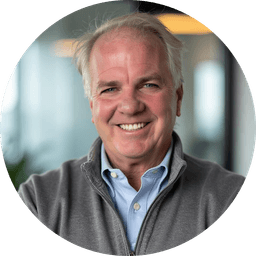
Tim Boyle
Founder & President, A3 Brands
Tim Boyle is the founder and president of A3 Brands, the automotive SEO agency working with car dealerships across the United States. His 20+ years in automotive include distributing products to 3,000+ dealerships at Speedway Distributors, running the Internet Sales and BDC department at Baker Automotive Group, and managing Acura's digital programs across North America at Shift Digital. He built A3 Brands as one of very few SEO agencies working exclusively with car dealers.
Read Tim’s full bio →